
Everything you need to run peptide microarray experiments in your own lab, from incubation trays and control reagents to scanners and analysis software.
PEPperCHIP® Peptide Microarrays use fluorescence-based detection for straightforward in-house analysis. Follow our standard immunoassay protocol to screen antibodies, sera, or proteins, then scan and quantify your results using any compatible microarray scanner.
For any additional questions, visit our FAQ or contact us directly.
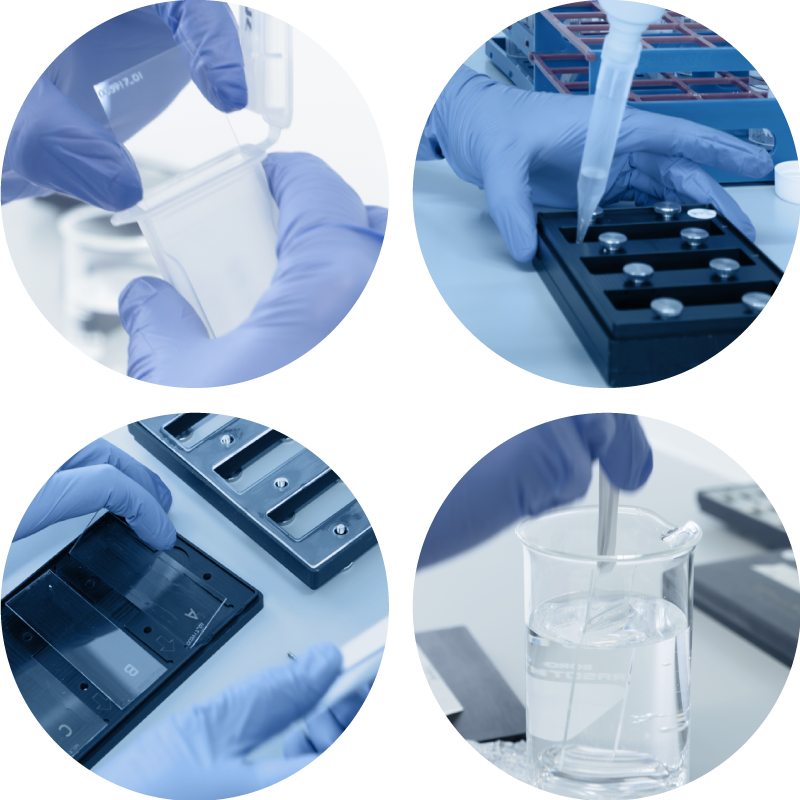
Watch our short animated video for a quick tutorial on how to handle PEPperCHIP® Peptide Microarrays.
Screening your samples with PEPperCHIP® Peptide Microarrays is straightforward and follows a standard immunoassay protocol. Similar to a benchtop ELISA, the protocol follows a sequence of incubation and washing steps. The following materials are needed to perform the assay, and for each we can provide recommended products which may be additionally requested along with your PEPperCHIP® Peptide Microarrays:
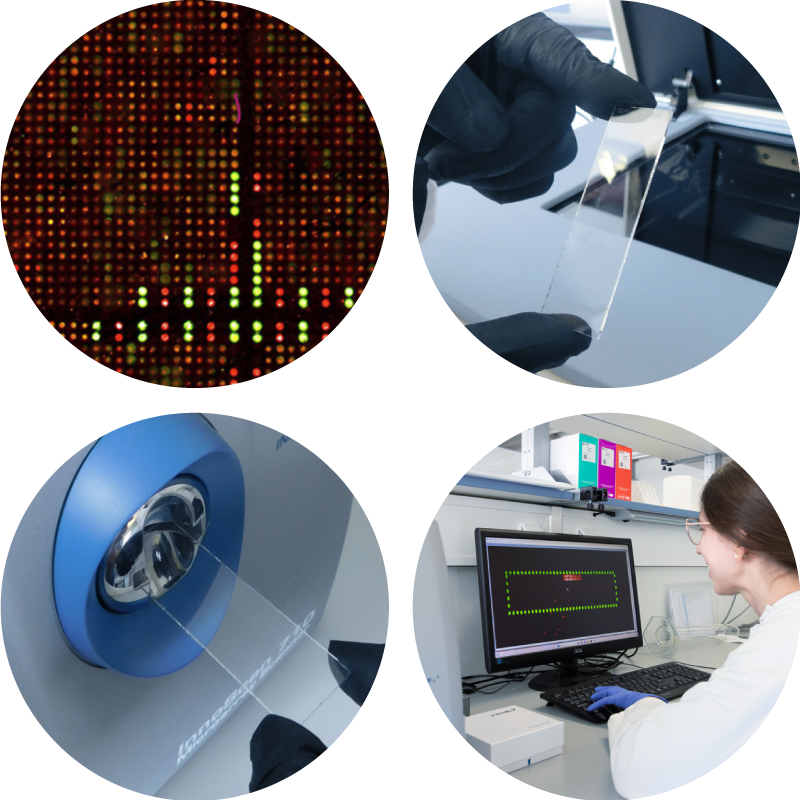
All commercially available microarray scanners that are compatible with 75mm x 25mm microscope slides can be used to scan PEPperCHIP® Peptide Microarrays. We recommend a scanning resolution of 20 μm and fluorescent read-out of DyLight680/DyLight800 or Cy3/Cy5 fluorescent dyes. You can find a list of compatible scanning devices here.
PEPperPRINT uses in-house the following scanners:
LI-COR Odyssey®
The MAPIX Analyzer is an intuitive and easy-to-handle software solution for reading out fluorescent signals from PEPperCHIP® Peptide Microarray images, and supports quantification of microarray data. The software links microarray grid files (.gal) with microarray content information (.tiff). Currently, we offer three different software license types for use with Windows OS:
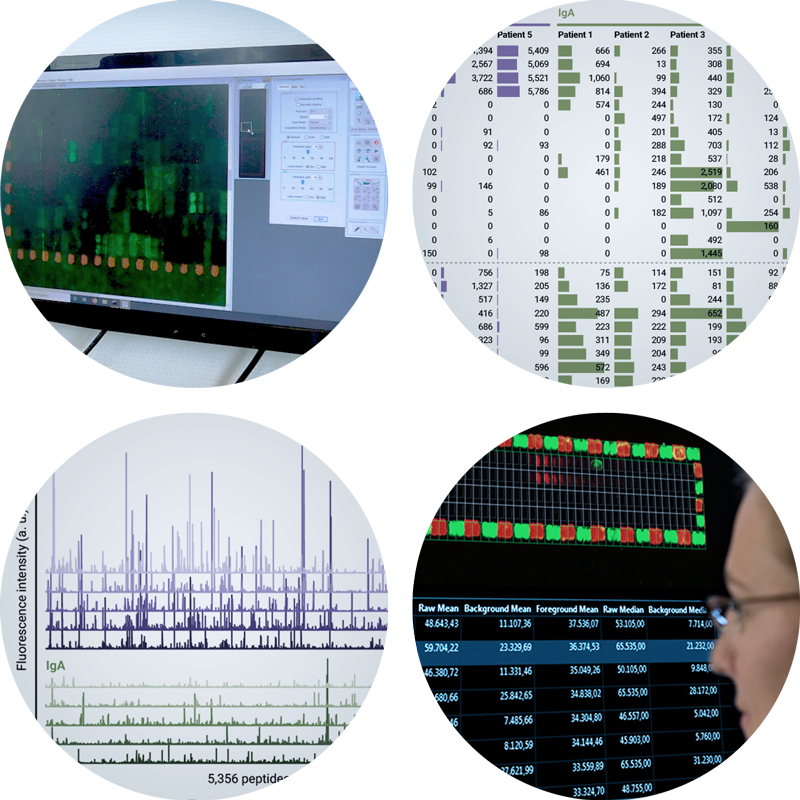
In this short video, researchers at New York University describe how to perfom epitope biomarker discovery experiments using PEPperCHIP® Peptide Microarrays, demonstrating in detail each step from performing the immunoassays, to data acquisition, to finally data analysis.